Unlock the value of AI across your business processes.

We use AI to analyse and redesign processes before AI is embedded in them. Engagements are delivered in a matter of weeks, with minimal disruption to day-to-day operations.

Process Transformation with AI

Key outcomes

A fact-based view of the current process, a prioritised assessment of pain points, an implementation roadmap and working prototypes.

AI can transform how an organisation operates, provided the right foundations are in place

Processes come first

Where a process contains redundant steps, duplicated controls and manual data entry, it typically needs to be redesigned before AI is introduced.

Rules must be explicit

AI can only operate within a process when its rules and exceptions are documented. Often they are tacit, held by a few experienced employees.

Accountability remains human

In an AI-enabled process, the human role must be designed as deliberately as the role of AI: who reviews outputs, when to intervene, who makes the decision.

Traditional approach

Traditional process analysis is time-consuming, costly and disruptive

Time-consuming

Assessments take months, during which decisions on the process are put on hold.

Costly

The cost of a dedicated consulting team turns process analysis into a one-off exercise, limited to a handful of processes.

Disruptive

Group workshops place employees under scrutiny and tend to surface the official process rather than the actual one.

We use AI to analyse and redesign the process before embedding AI in it

Our consultants

  • Lead the engagement, conduct the interviews and manage stakeholder relationships
  • Define the process phases, prioritise the issues and shape the recommendations
  • Review every output and validate it with the client

AI

  • Transcribes and structures interviews in real time
  • Cross-checks documents and data against interview findings and flags discrepancies
  • Reconstructs the process with rigour and consistency
  • Prepares summaries, data requests and deliverables

ImpactEngagements are delivered in a matter of weeks, with minimal disruption to day-to-day operations.

Our five-phase approach, from interviews to handover

  1. 01

    Interviews

    One-to-one remote interviews with the people who operate the process

    Client involvementOne hour per interviewee

  2. 02

    Validation

    Company documents and data complement, confirm or correct the interview findings

    Client involvementA single point of contact gathers documents and data

  3. 03

    Diagnosis

    We identify where the process loses time and value, and the root causes

    Client involvementNone: delivered by our team

  4. 04

    Roadmap

    We design the interventions, their sequencing and where to deploy AI

    Client involvementNone: delivered by our team

  5. 05

    Handover

    Findings and roadmap are presented to senior management

    Client involvementOne two-hour session with senior management

Our approach in detail

We reconstruct the process through one-to-one interviews

Phase 01 · Interviews

We reconstruct the process through one-to-one interviews

  • Each interview is a one-hour video call in which a single participant walks us through their work, step by step.
  • The first interview is held with the process owner, who has end-to-end visibility; this defines the process phases.
  • Subsequent interviews explore each phase in depth with the people who perform it.
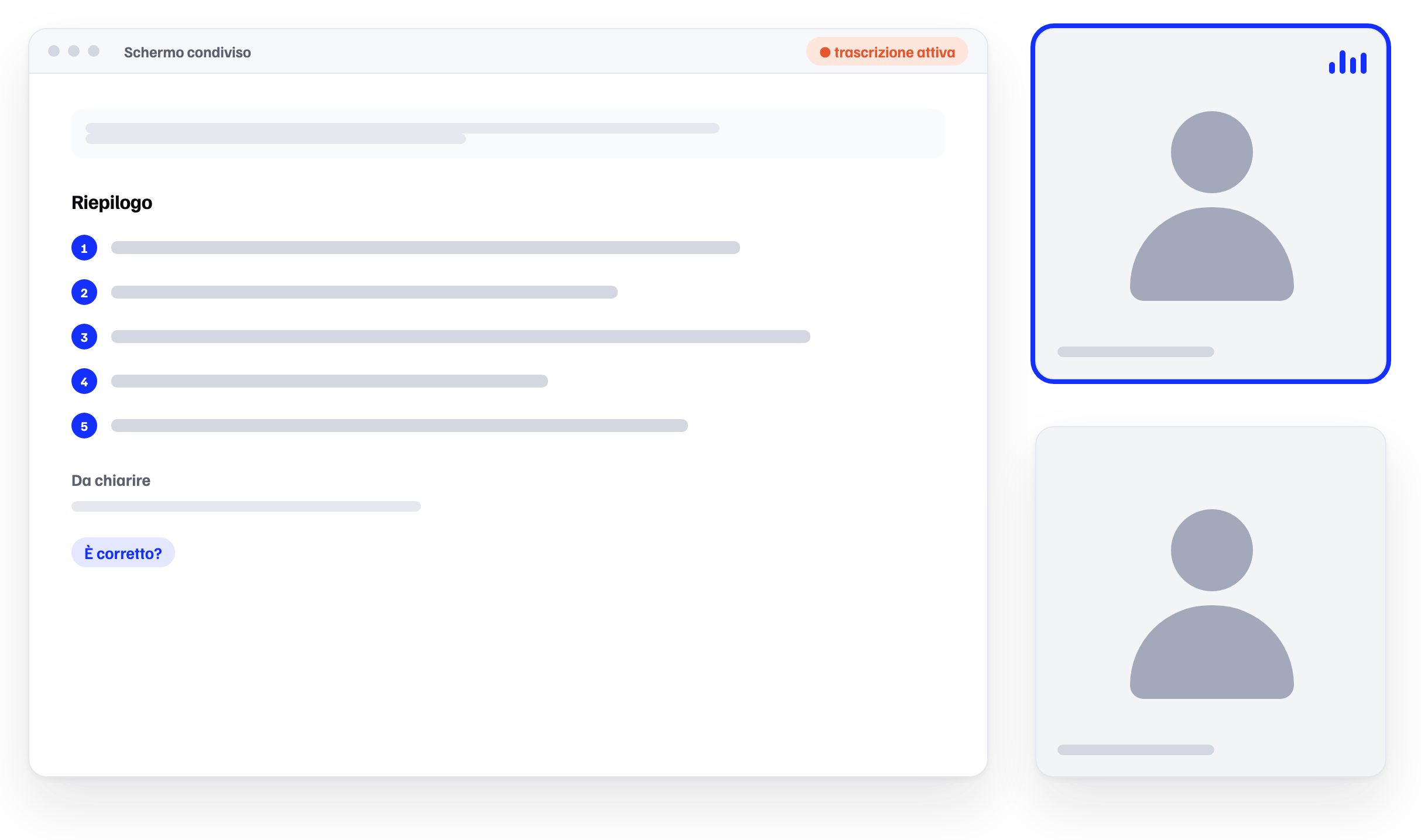
  • During the call, AI transcribes the conversation and displays a summary of the steps on screen, which the interviewee validates in real time.
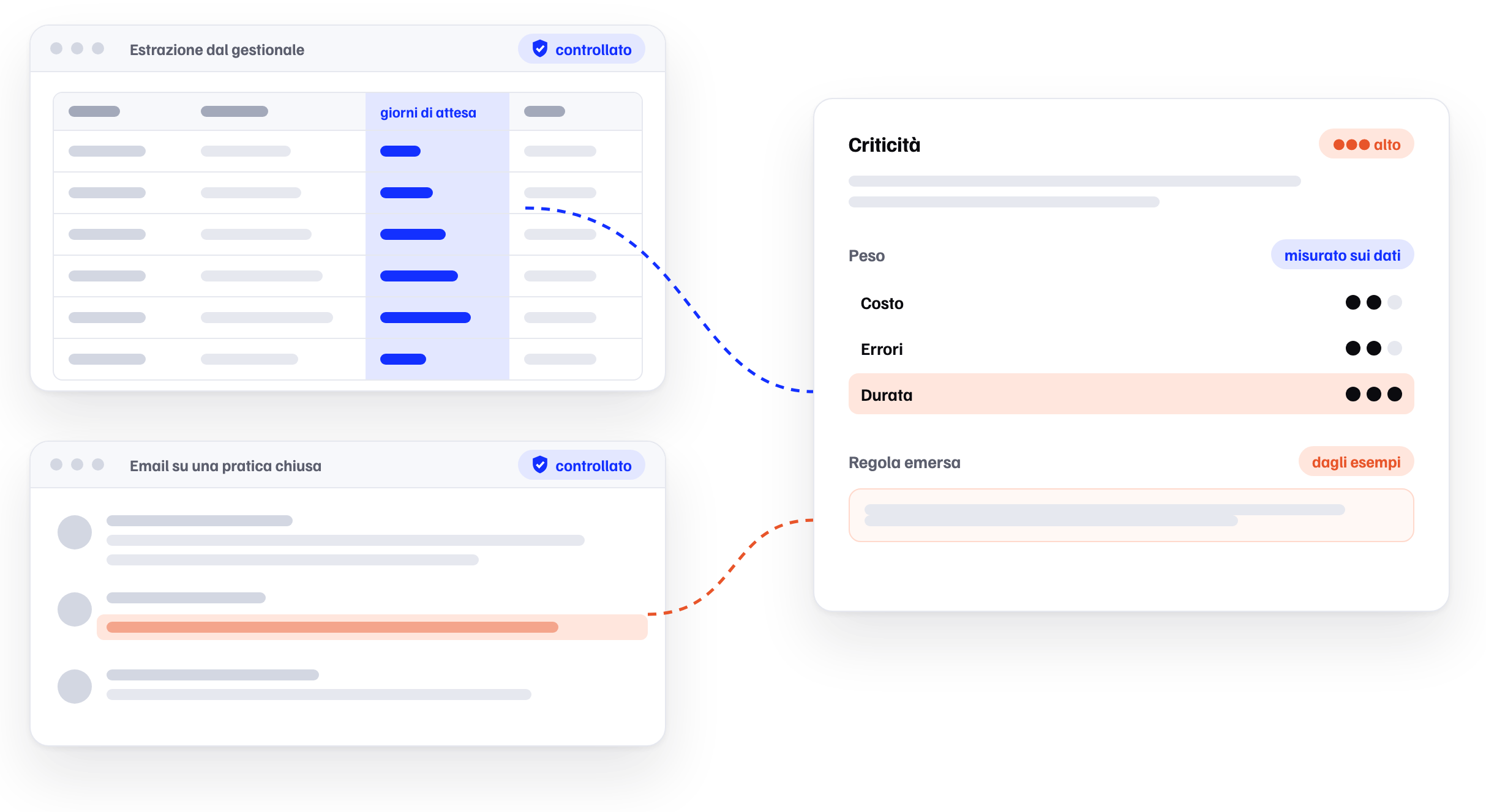
Documents and data complement the interview findings

Phase 02 · Validation

Documents and data complement the interview findings

  • Interviews identify the procedures, records and data needed to validate what participants describe.
  • The data often already resides in company systems but is not used to quantify the impact of each inefficiency.
  • Real case examples, such as email threads and closed files, reveal tacit rules and how exceptions are handled.
  • Every file is screened before AI processing to minimise the use of personal data.
We assess each pain point and trace it to its root causes

Phase 03 · Diagnosis

We assess each pain point and trace it to its root causes

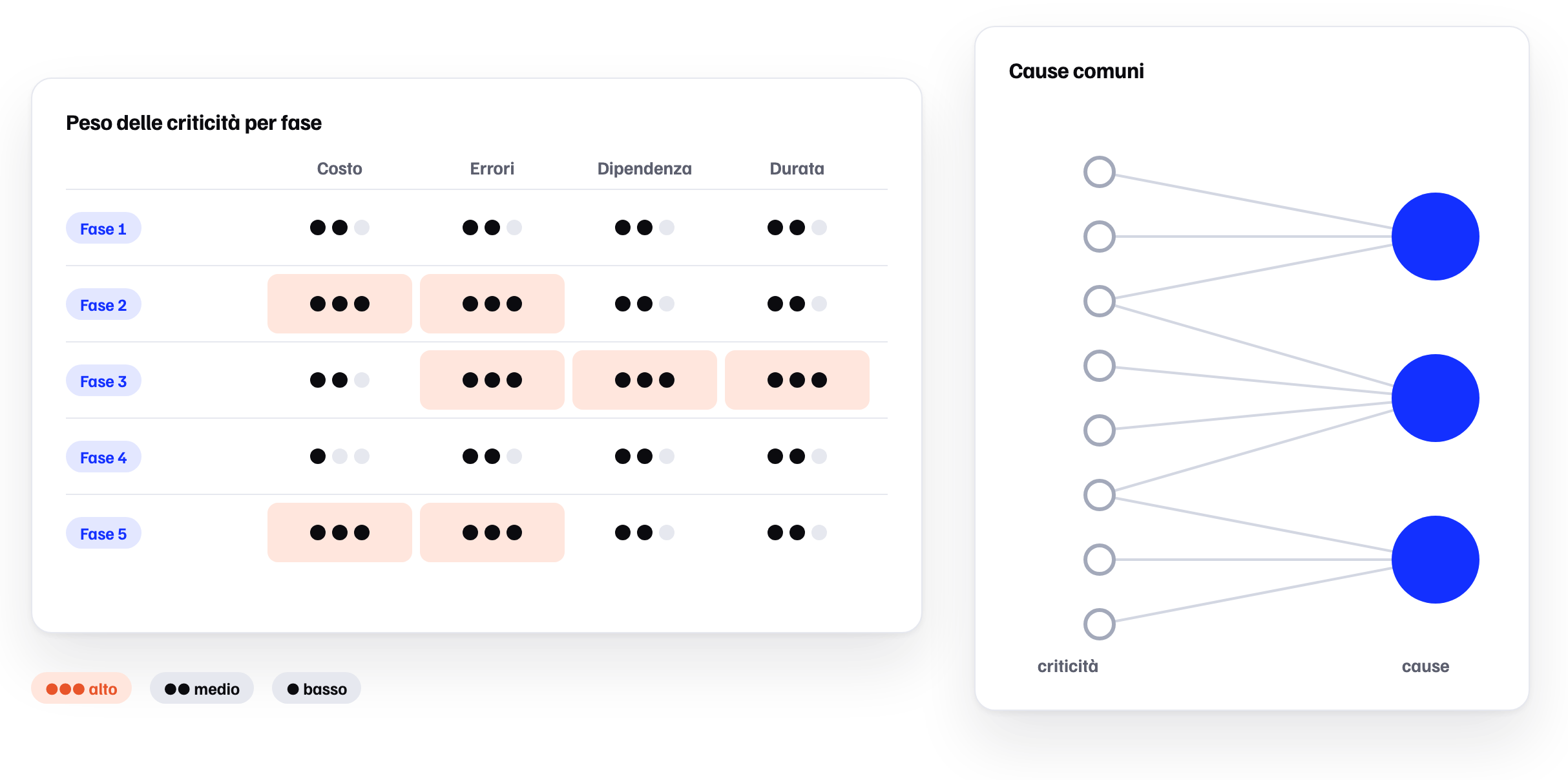
  • A pain point is where work slows down, is repeated or becomes unnecessarily complex. We assess each one across four dimensions: cost, error rate, key-person dependency and cycle time.
  • AI assigns a rating on each dimension, supported by the data or testimony collected; our consultants review and confirm every rating.
  • We analyse pain points across phases to identify common root causes.
  • We target interventions at shared root causes, since addressing one cause resolves several pain points at once.
We compare documented procedures with actual practice

Phase 03 · Diagnosis

We compare documented procedures with actual practice

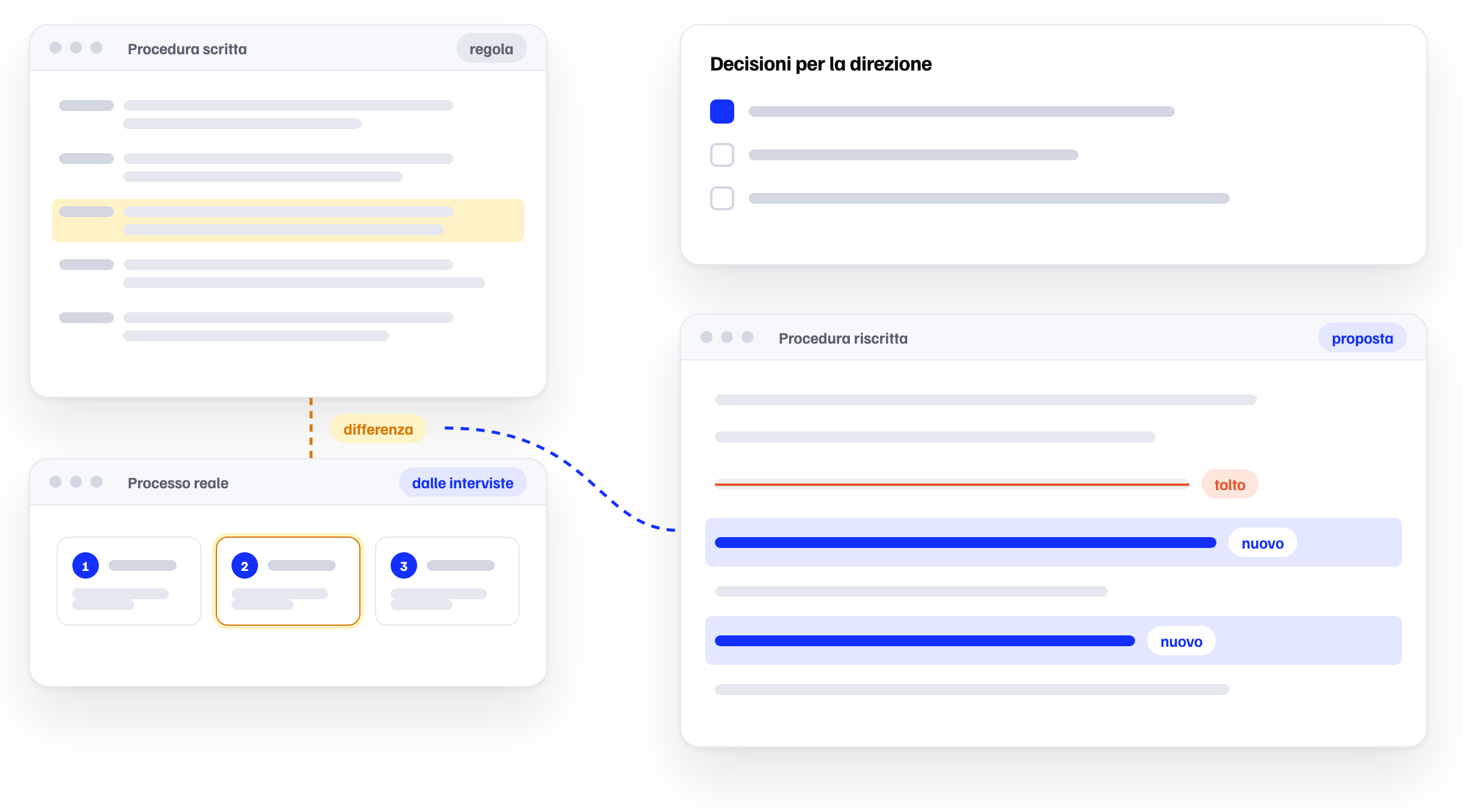
  • Using AI, we review company procedures phase by phase against the process mapped in interviews, to identify where they still reflect actual practice and where they do not.
  • For each gap we set out what the procedure requires, how the work is performed today and what is needed to close the gap.
  • We consolidate into a single list the decisions that rest with management, such as approval authorities or permitted exceptions.
  • The review concludes with a proposed revision of the procedure, aligned with the actual process and with management decisions.
We address organisation and rules first

Phase 04 · Roadmap

We address organisation and rules first

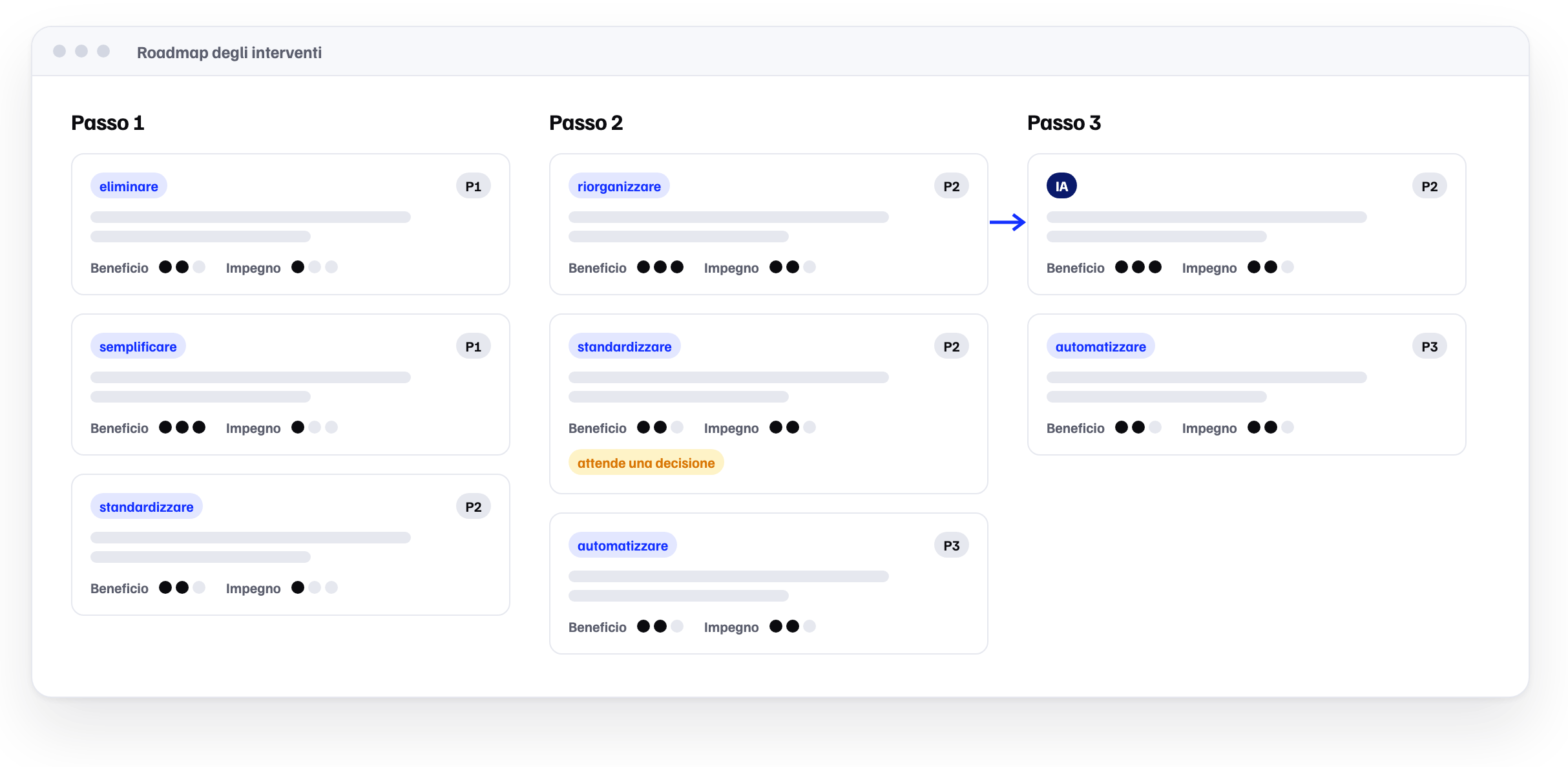
  • For each pain point we identify the simplest solution that removes its root cause: eliminate, simplify, standardise, reorganise, automate or apply AI.
  • Where a tool is required, we start from the client’s existing technology.
  • Each intervention specifies expected benefits, required effort and priority.
  • We sequence the interventions into a roadmap, based on their interdependencies and the decisions required from the client.
We deploy AI where it creates value, under human oversight

Phase 04 · Roadmap

We deploy AI where it creates value, under human oversight

  • Once organisational interventions are defined, we assess where AI can improve the quality, speed or capacity of the work, from assisting people to automating entire activities.
  • We introduce AI only where it delivers a measurable benefit on a specific pain point, applying the same criteria used for other interventions.
  • For each use case we define the data sources, the expected output and the person responsible for reviewing it before it takes effect.
  • We define rules and approved tools, including for AI already used through personal accounts.
We deliver quick wins as working solutions

Phase 04 · Roadmap

We deliver quick wins as working solutions

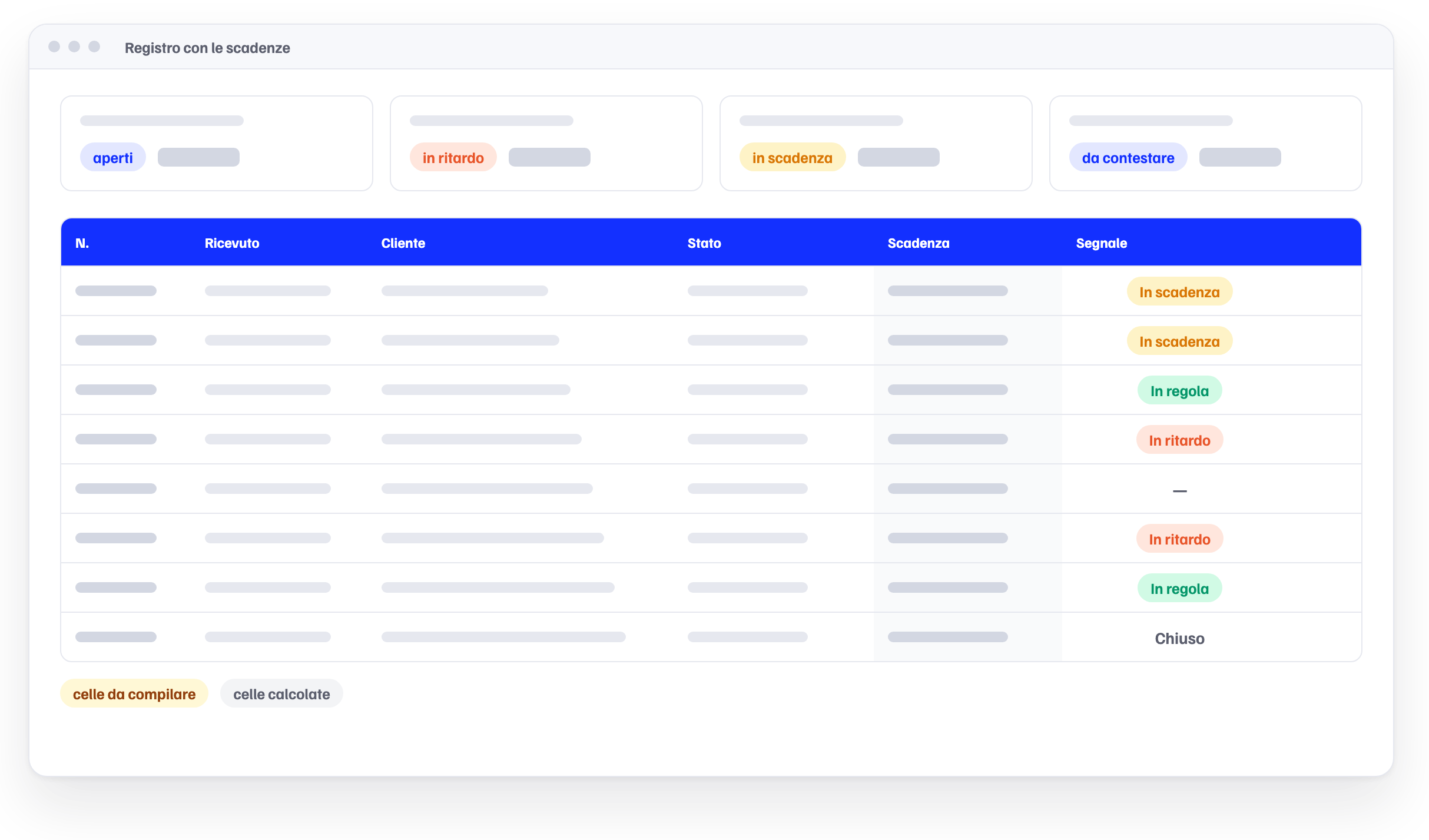
  • Where an intervention requires a lightweight tool, such as a spreadsheet to track deadlines, we build it and deliver it as a prototype.
  • We use the client’s existing tools, so the first intervention requires no new investment.
  • Each prototype comes with test cases and instructions, so it can be piloted on real cases.
  • Management decides on adoption after seeing the solution in operation.

Every deliverable in a single process wiki

All deliverables are handed over to the client in a wiki, through which the entire process can be inspected: phases, roles, pain points, root causes, procedures, roadmap and prototypes, each traced back to its source.

1 Process / 1 Overviewacme_complaints
0 TaskRoadmap · Requests1 ProcessOverviewRolesConstraintsGapsTools and documentsGlossary2 Phases1Complaint intake2Containment3Root cause and 8D reply4Credit note5Chargebacks3 Proposals4 Data collection
Overview
In brief

The “Customer complaint handling” process takes a complaint from its arrival to the closing of the 8D, the credit note and the definition of chargebacks. It is divided into five phases.

164 complaints in 20256 interviews9 documents
The process at a glance
1. Complaint intake and registration
Critical pointsComplaint stalled before reaching qualityMixed complaint / dispute cases

Illustrative examples

A guided expense report in Excel

Illustrative case

A guided expense report in Excel

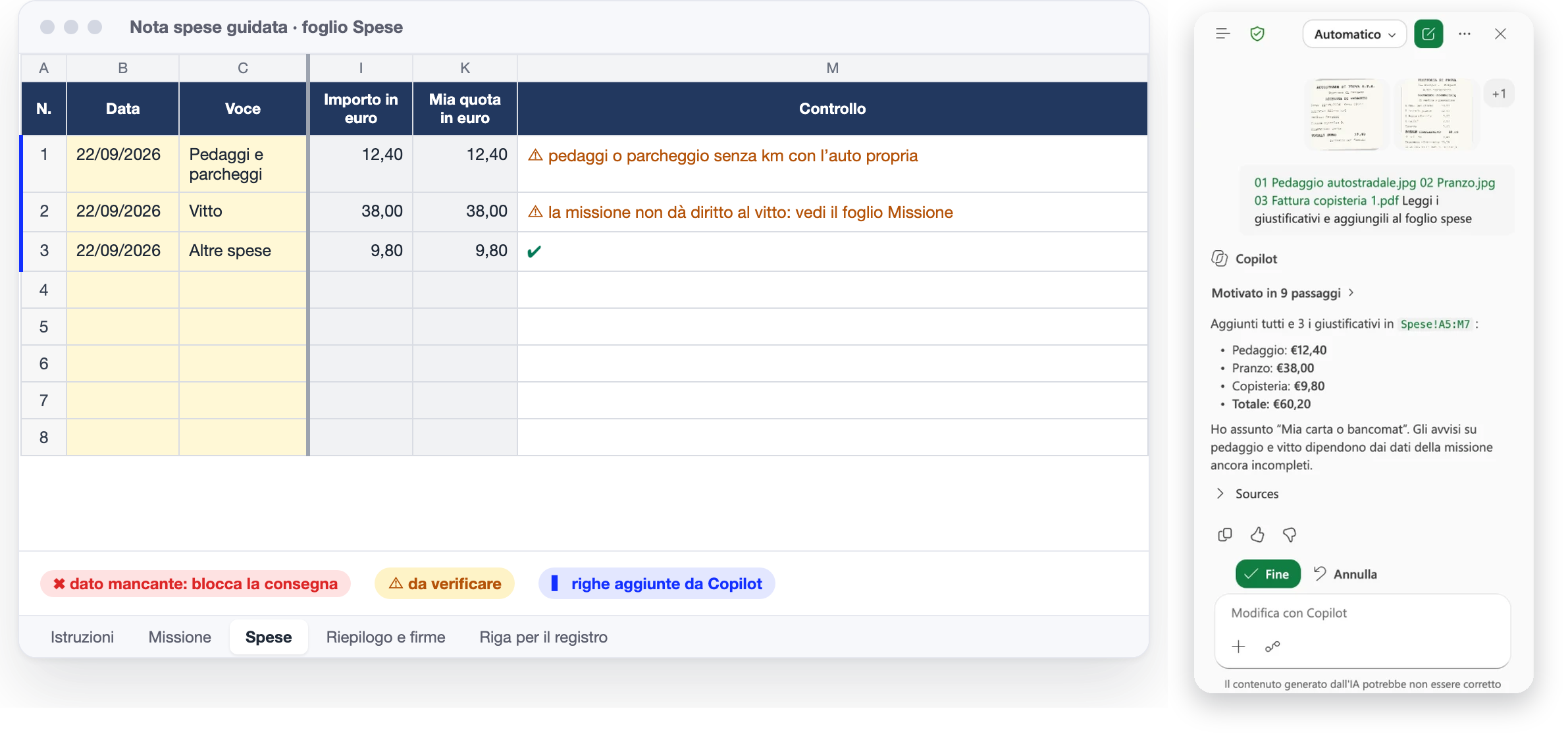
For an organisation with frequent business travel, we turned the expense claim form into an Excel workbook that applies policy rules as it is completed.

  • Alongside each expense, the workbook flags missing information or items to review, such as meal allowance caps or accommodation limits.
  • It calculates the reimbursement and generates the entry that finance imports into its ledger, eliminating manual re-keying.
  • The spreadsheet’s AI assistant reads receipts and invoices and proposes entries for confirmation.
Drafting a technical report

Illustrative case

Drafting a technical report

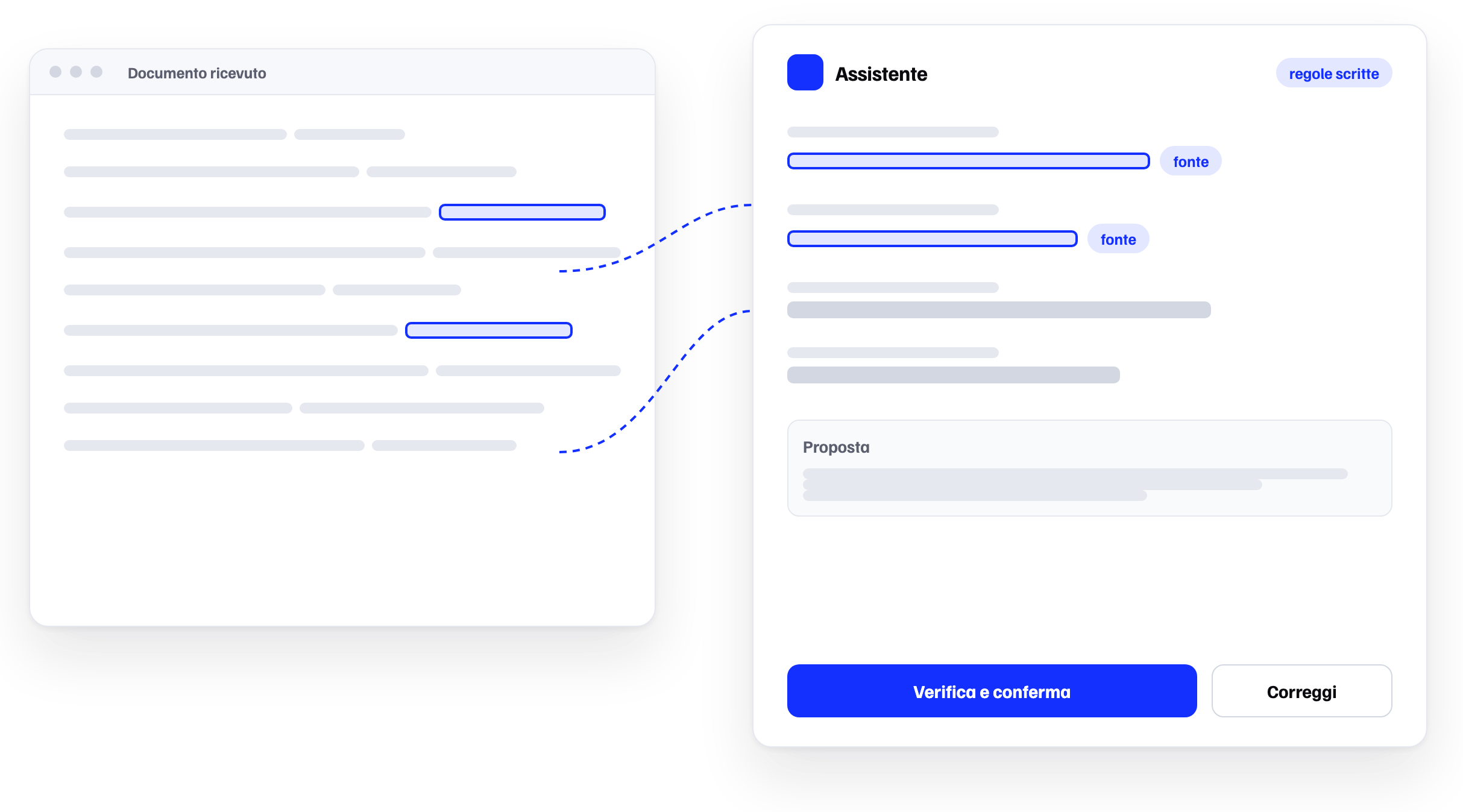
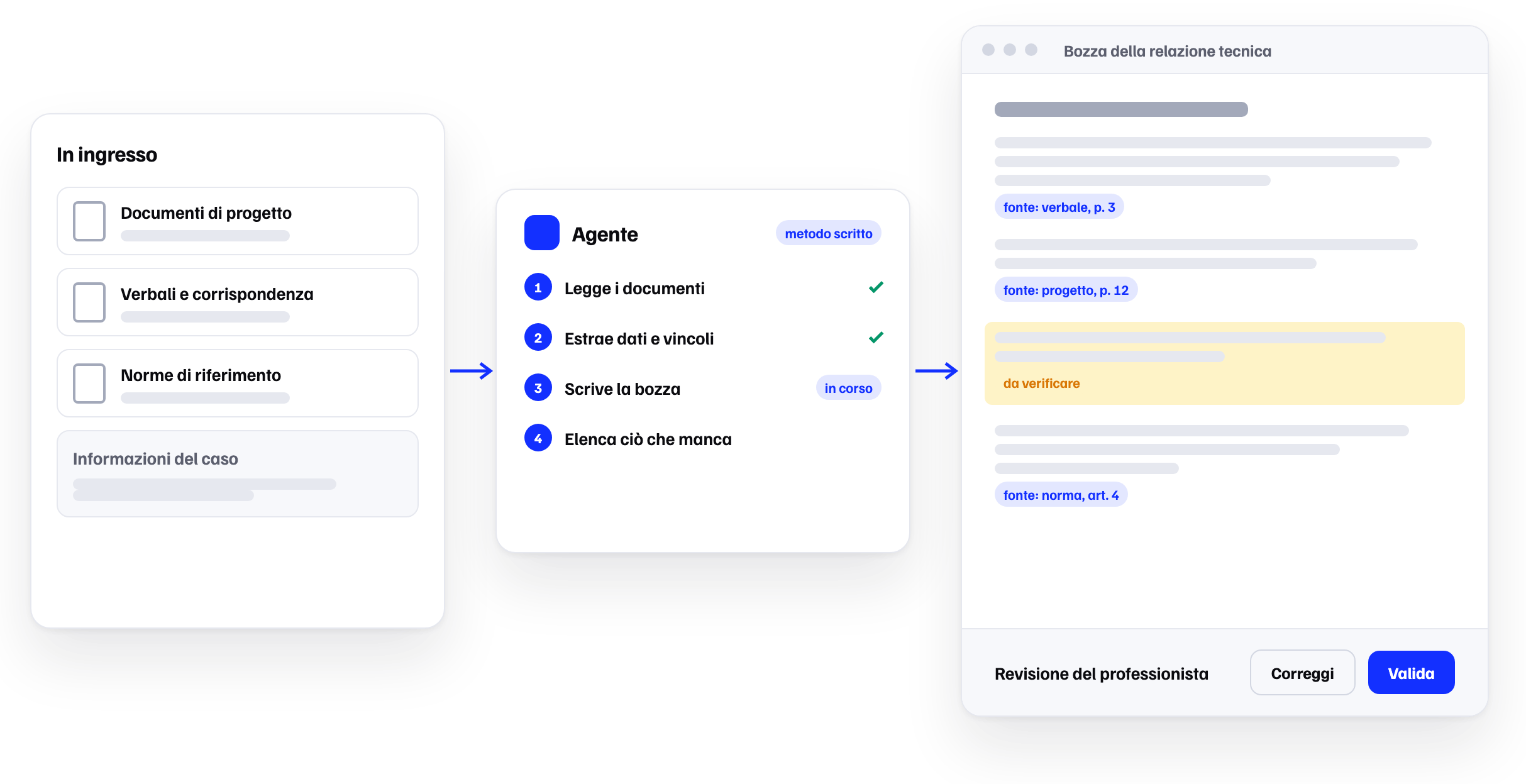
An AI agent, built as a Claude skill, ingests project documents and case information and drafts a technical report in the firm’s standard format.

  • Every statement in the draft is referenced to its source document and page.
  • Information not contained in the documents is never inferred: it is raised as a question for the professional.
  • The professional reviews, amends and approves the draft; no document is issued without their sign-off.

Value is measured in new capabilities gained and costs avoided

Growth new capabilities

  • Scale without increasing headcount
  • Launch services that were previously not feasible
  • Improve customer responsiveness

Efficiency cost optimisation

  • Reduce costs and working hours
  • Prevent errors and rework
  • Shorten lead times
  • Reduce key-person dependency

Getting started: one end-to-end process and an initial conversation

  1. 01

    Initial call

    A 30-minute session to select the process, define its scope and appoint a client point of contact

  2. 02

    First interview

    Within one week, with the process owner

  3. 03

    Handover

    Findings, roadmap and prototypes presented to senior management

Let’s discuss your priorities

Contact us